KARIKI GREEN
A butterfly lands on me. While arranged in downward-facing-dog she settles on my chest. Hello butterfly I say upside down. She flitters off, her big beautiful black and red speckled wings the span of my face move fast and slow. I accept the little blessing. Her tiny touch-down. Bye bye butterfly.
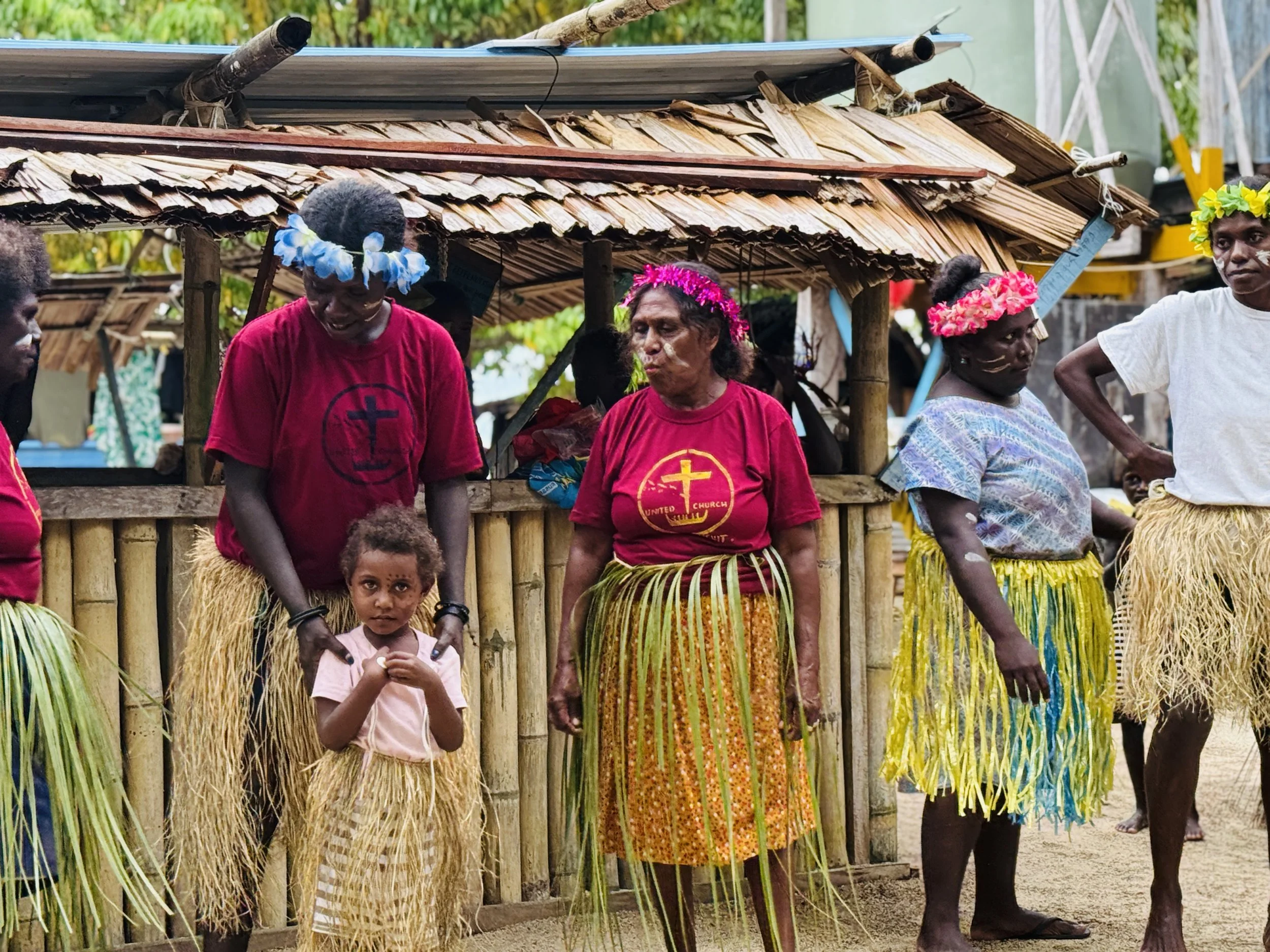
Strannik is anchored at Kariki; stern lines out, long umbilical cords latch us to land. We make-fast on a coconut tree. The women welcome us formally with song and dance that echoes of home: “Toru, Wha!” they call to begin. All the villagers are here to embrace us like whānau: kai and kōrero. They refer to us as white people, but declare New Zealanders as their favourite.
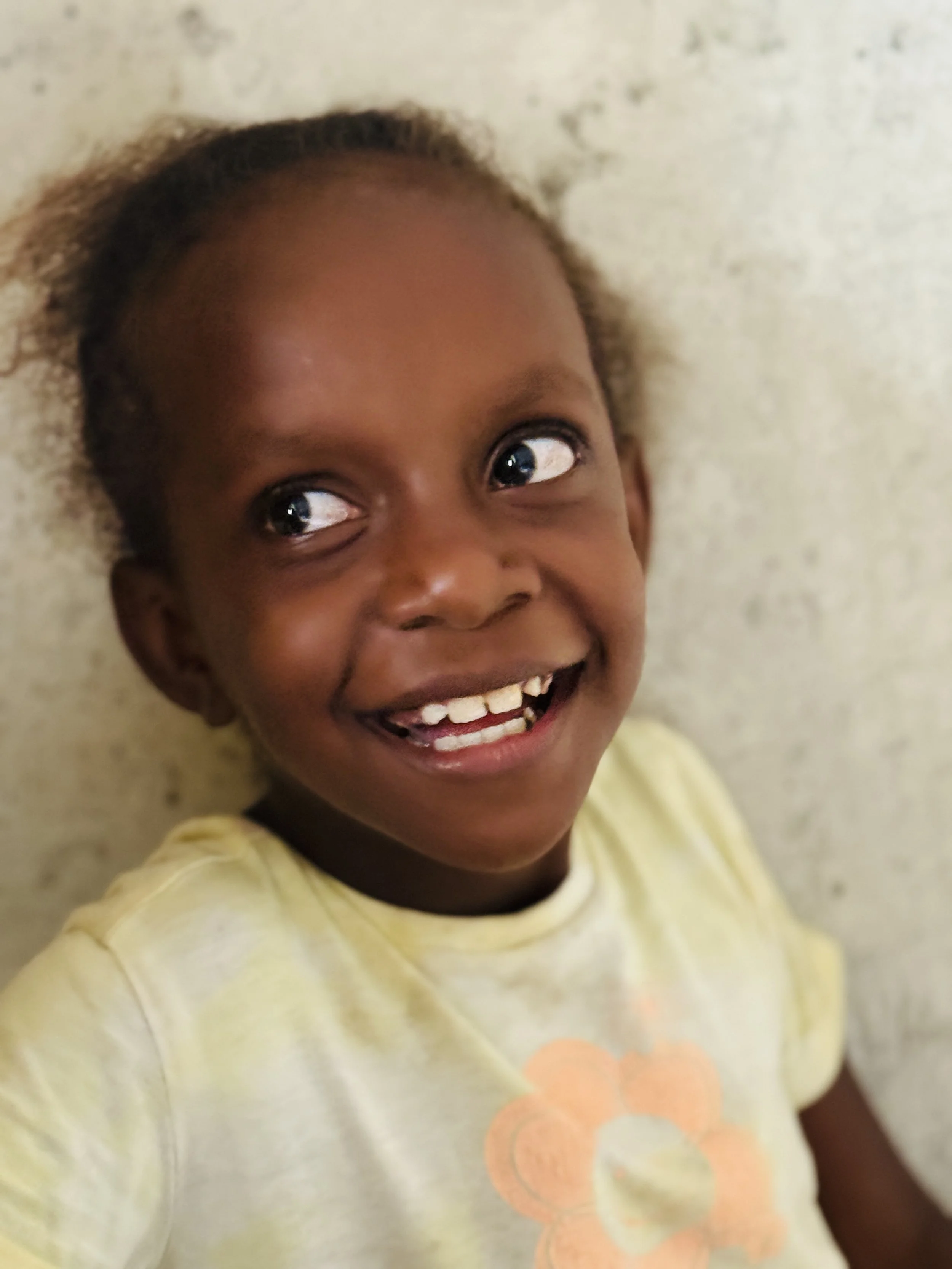
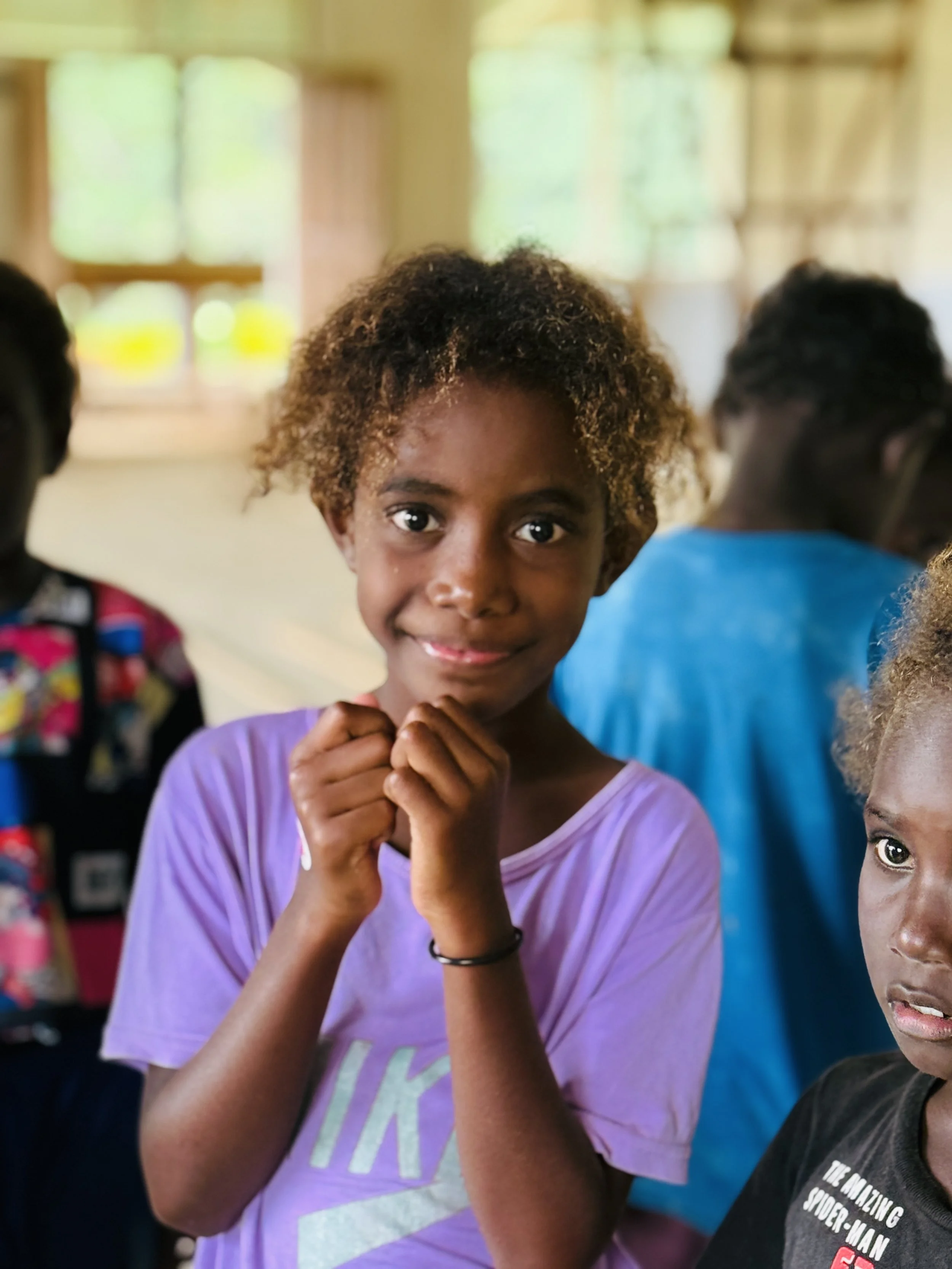
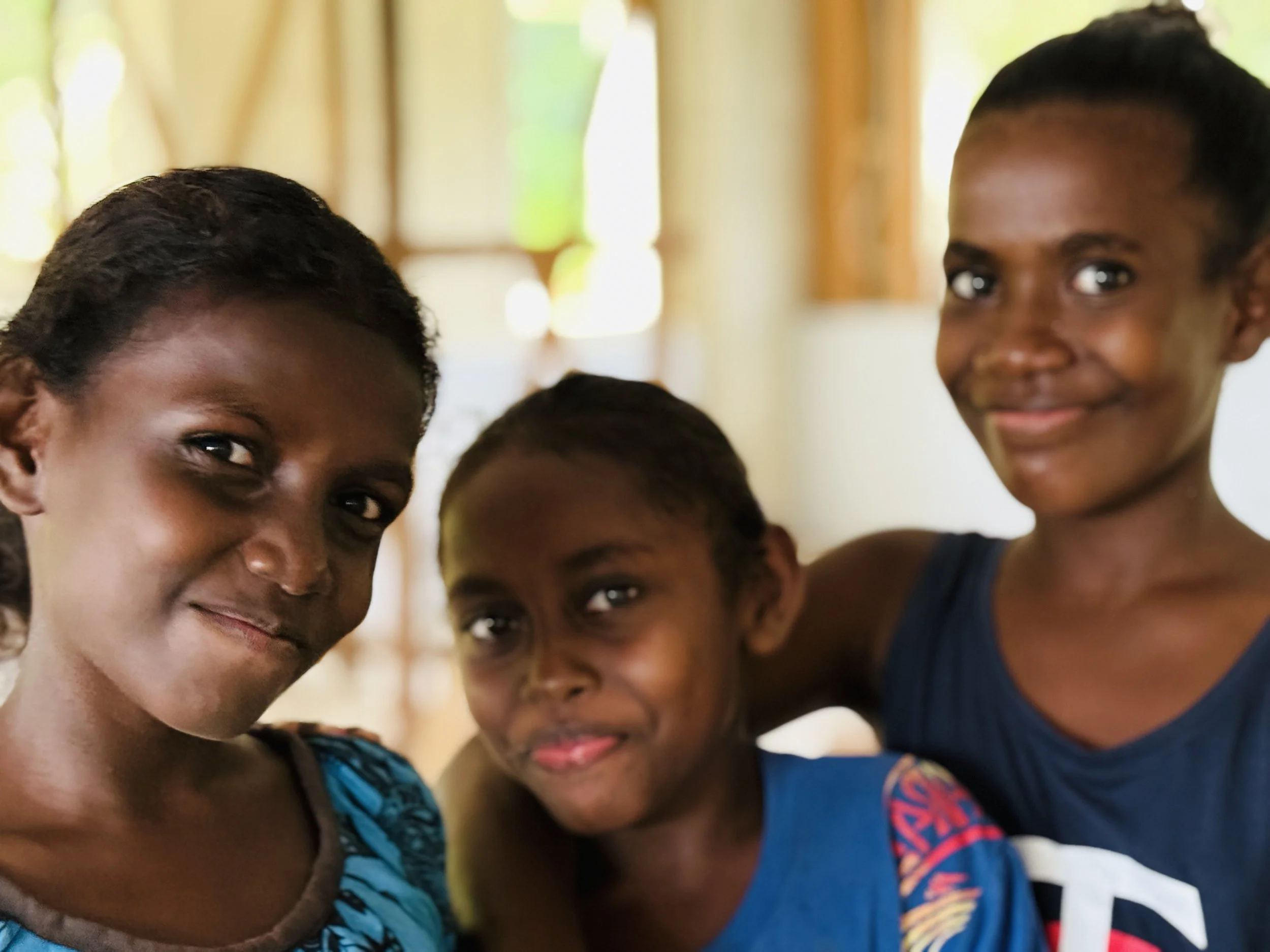
Here amongst the Shortland Islands in remote northern Solomon Islands we begin to make new friends. The children are my first friends, always my fast friends. We make a procession, onward, up a muddy hill, along a slippery path, skidding our way to their new, almost finished church.
The building is big, hall-like, a huge achievement. Through binoculars our eyes were drawn to the massive structure as we scanned the village from a long way out to sea. It has been their shelter over the past week as cyclone Maila took her sweet time to march on through. After meeting the builders we continue on our convoy and visit the school in the rain. We are used to it now; it’s been raining for a week.
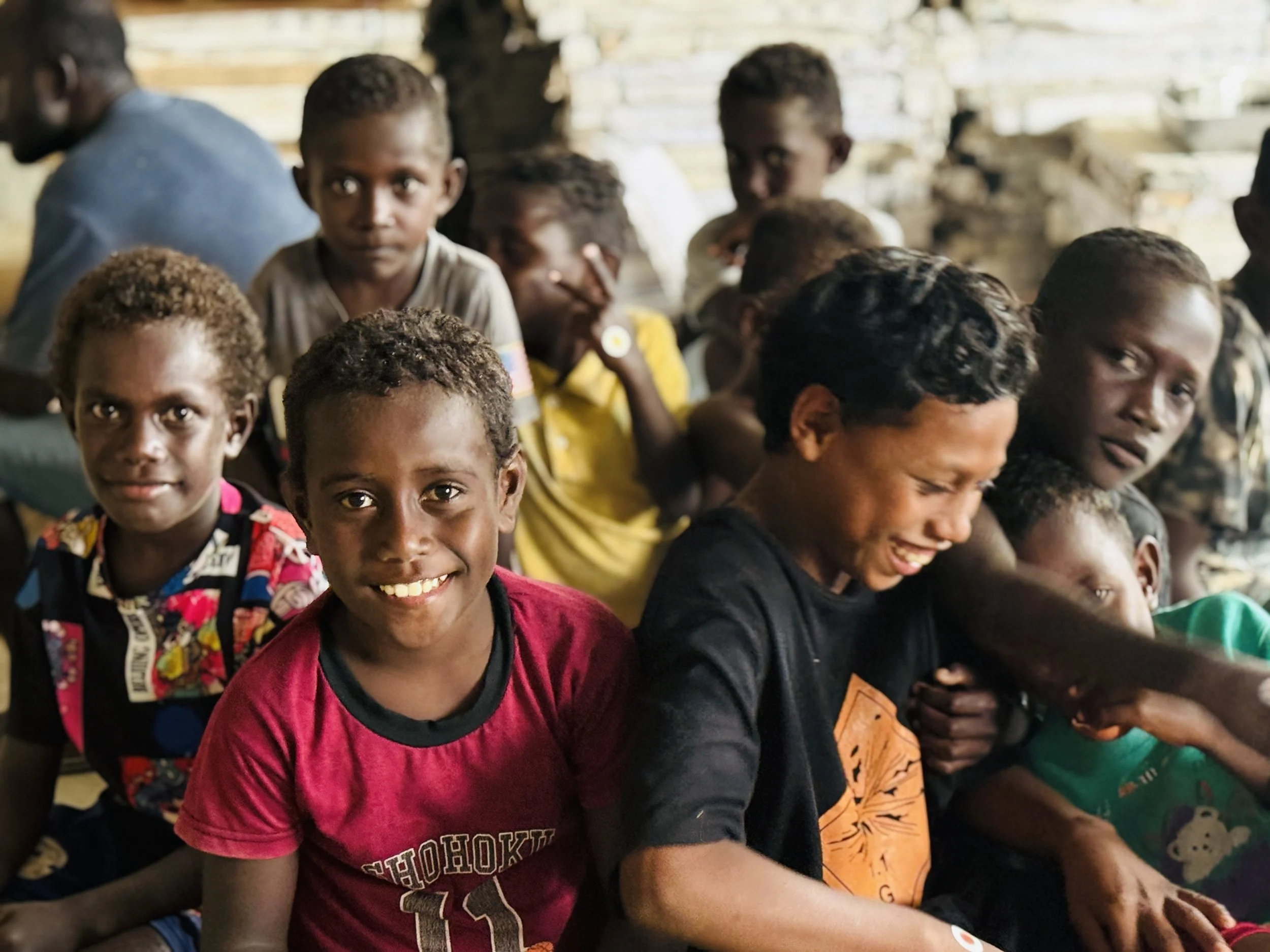
One of the young girls hangs close, shadowing me as we meander. Lots of eye contact, lots of smiles, she gets closer, closer, glance, glance. She summons the courage. Small breath, her hand darts out and encloses around mine. Holding hands, we walk, new friends. We visit her desk in the classroom, all without saying a word.
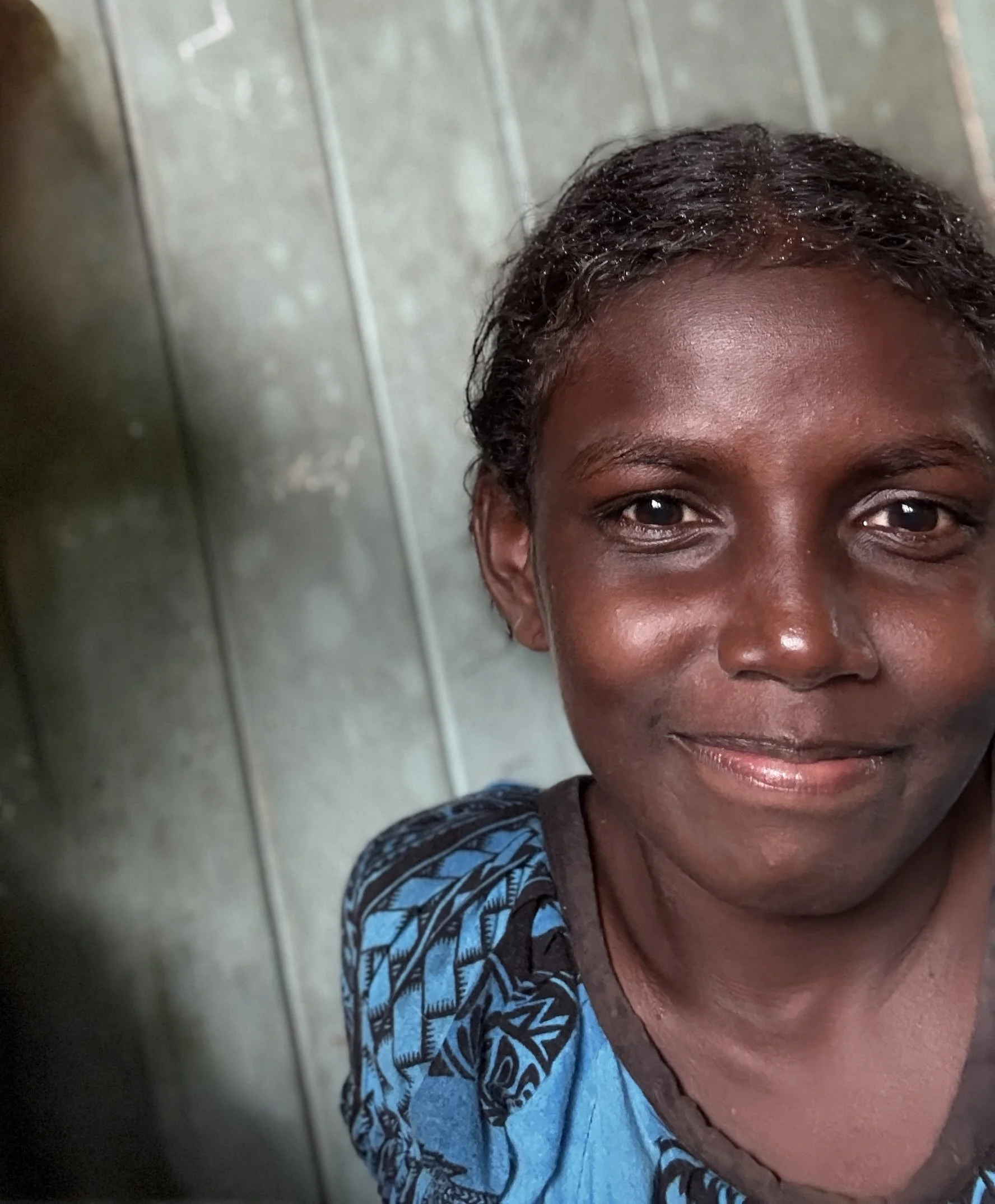
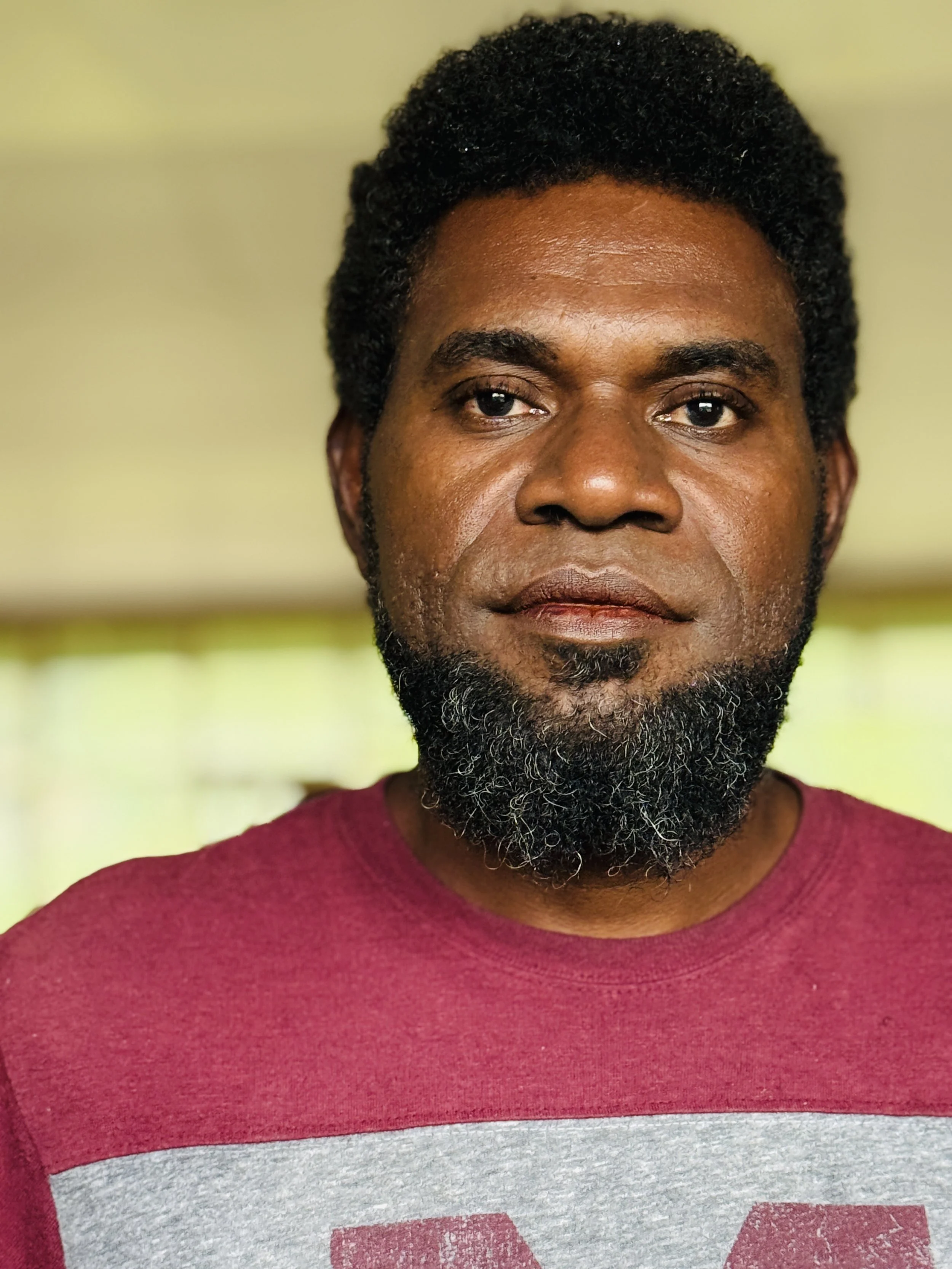
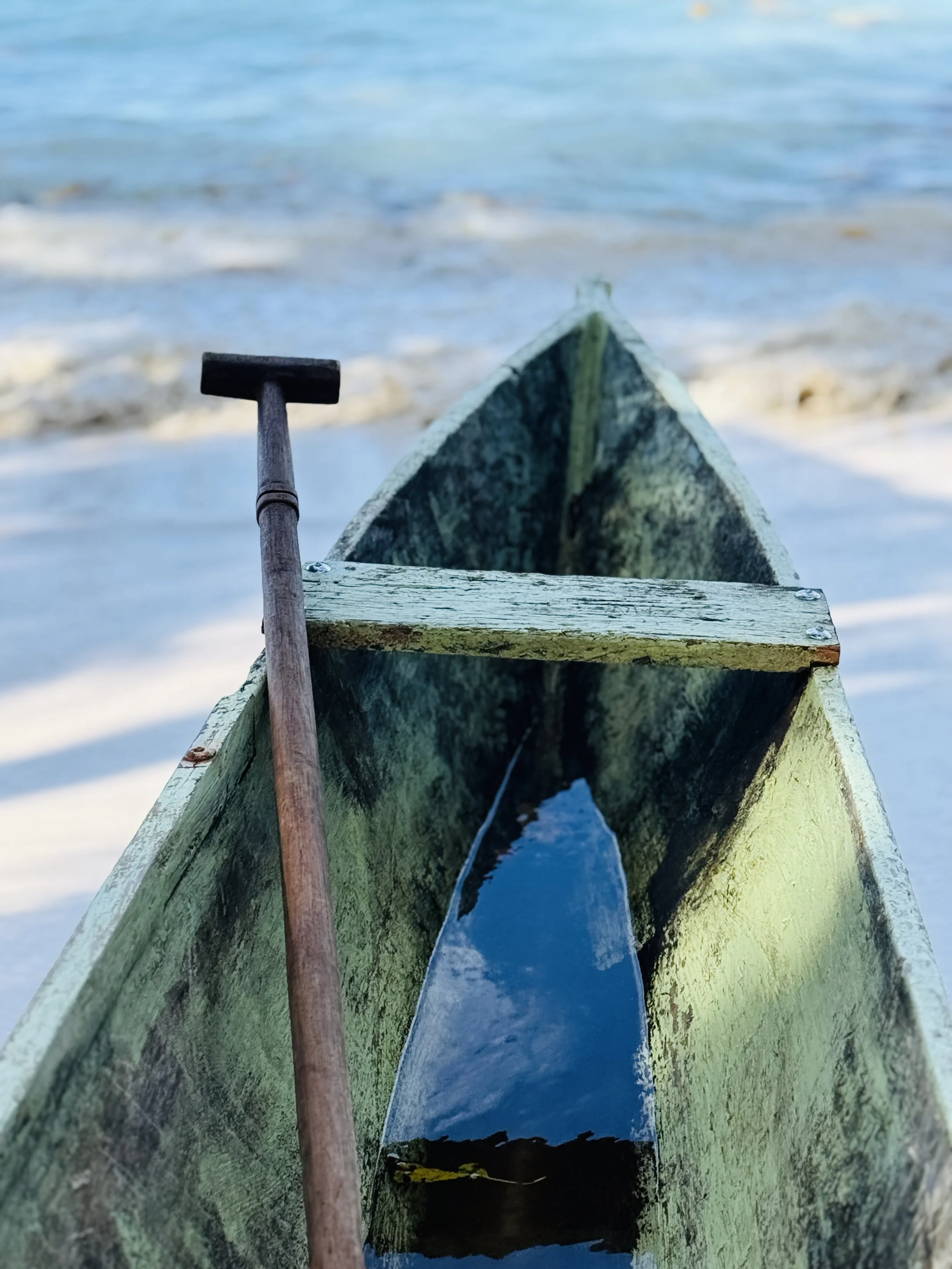
Patrick is our friend. As Head of Tourism he arranges for guides to take us to see turtles lay their eggs. It’s a night mission on another island; he says we will stay out until 2am. The night is glorious. All stars, no moon. All clear, no clouds. The sky is expansive. Four men collect us in their long boat and bioluminescence sparks off the water. We speed along by starlight. There is glitter all around.
The boys locate a clutch, a turtle’s nest. They dig out the freshly laid eggs to show us. Imagine 200 soft ping pong balls in a sandy hole one arm-length deep. They collect 30 eggs in a hat to take home to feed their families. They cover the eggs that remain, the hatchlings of which will go on to play a seriously stacked life-lottery; only 1 in 1000 will make it to adulthood.
One sweet night in the future the hatchlings will excavate themselves, instinctively clamber to the sea, to then hopelessly float about the ocean for several years through what scientists call their ‘lost years’ with high-hopes of one day becoming an adult. Sounds familiar.
We lay on our backs, on the cold wet sand to wait for a random mama turtle to come to the beach to dig a hole and lay her eggs. We quickly forget what we have come here for because the sky is so beautiful. Vast and busy, black and forever-deep, endless. Shooting stars call their names across the sky. The Milky Way a smudge. Stars are blinking, and satellites trudge out their night’s work. The night sky is the star of the show. We take turns nodding off and waking up. I can tell by the breathing. No turtles but we are happy.
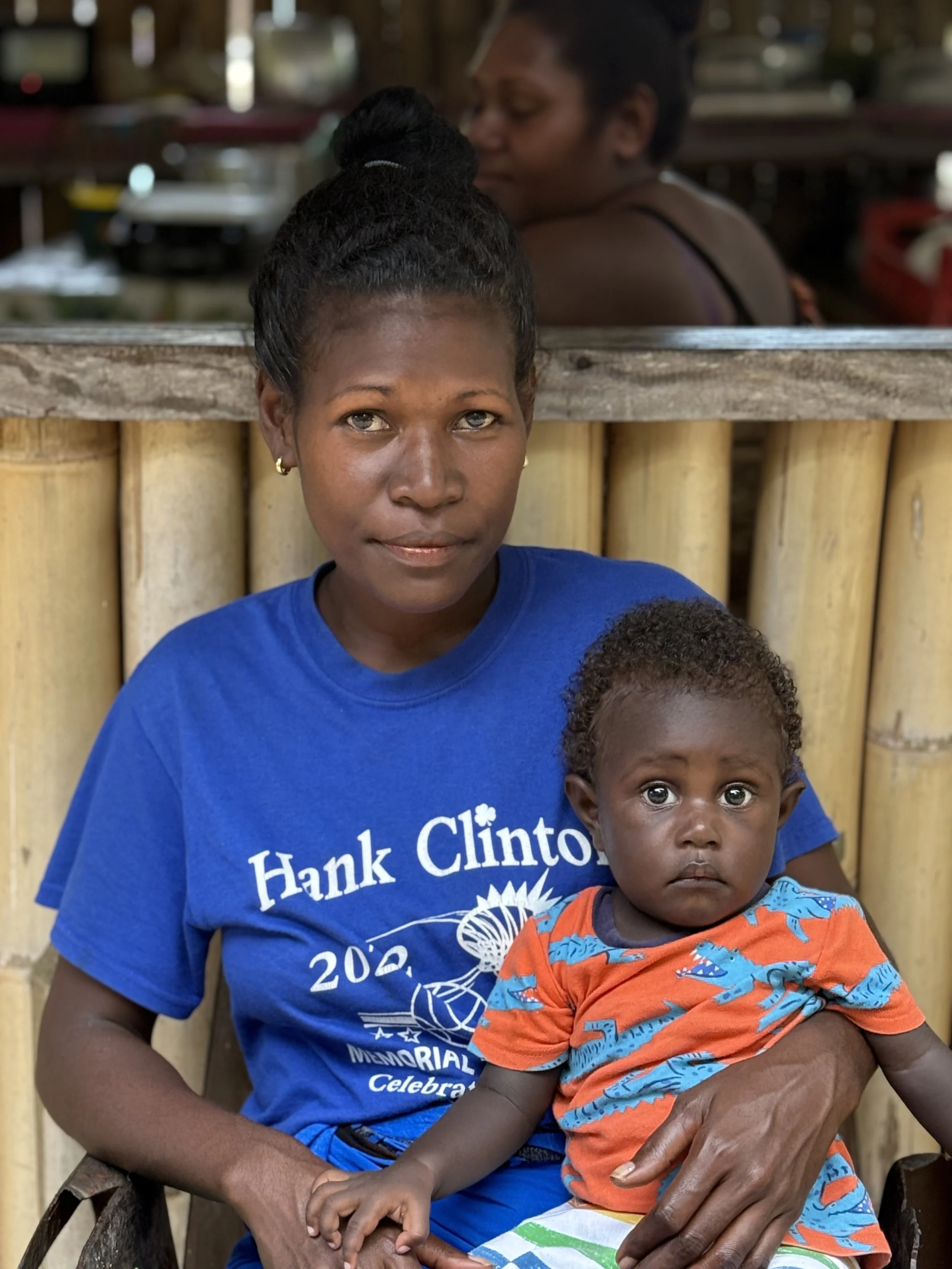
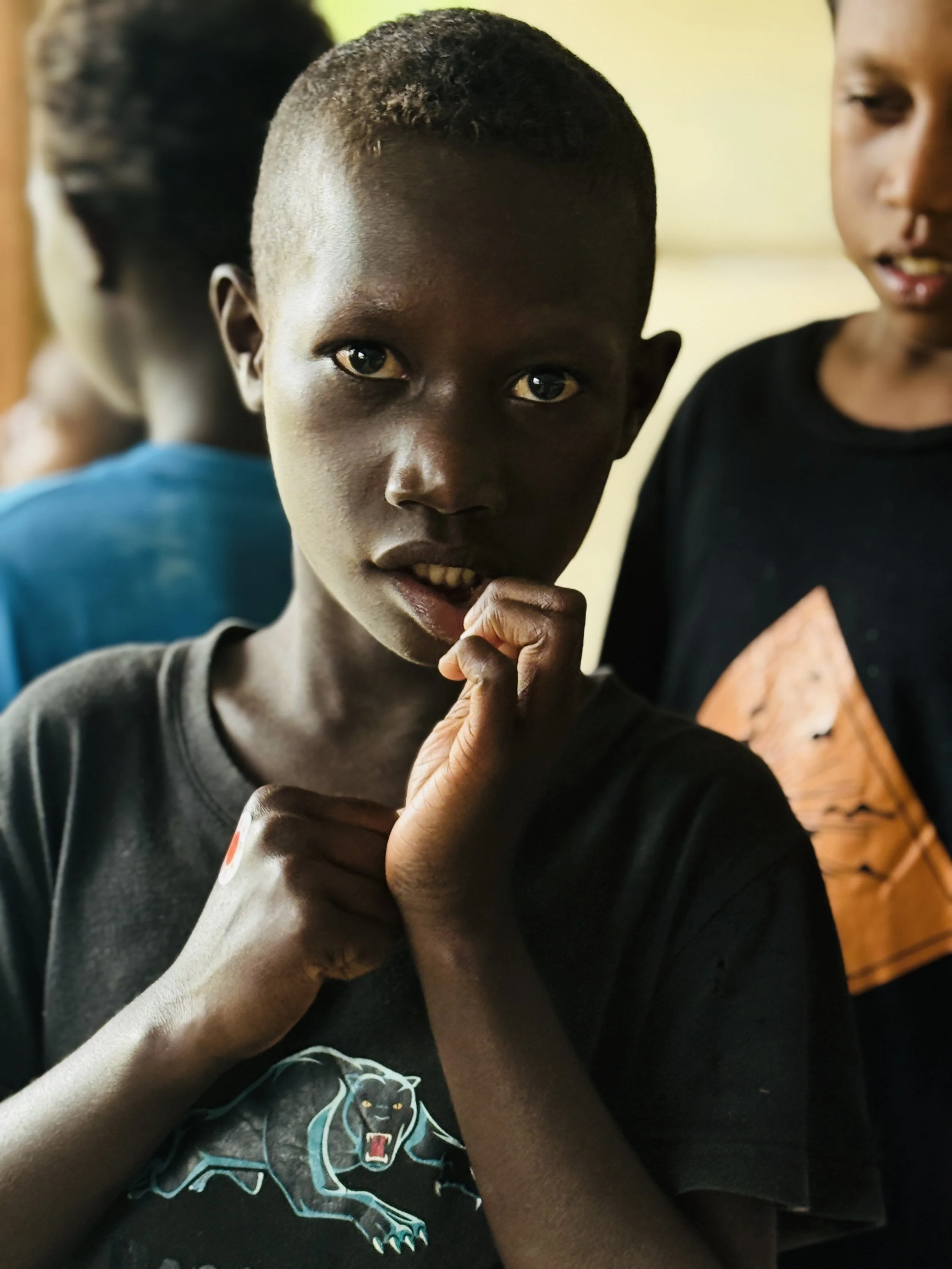
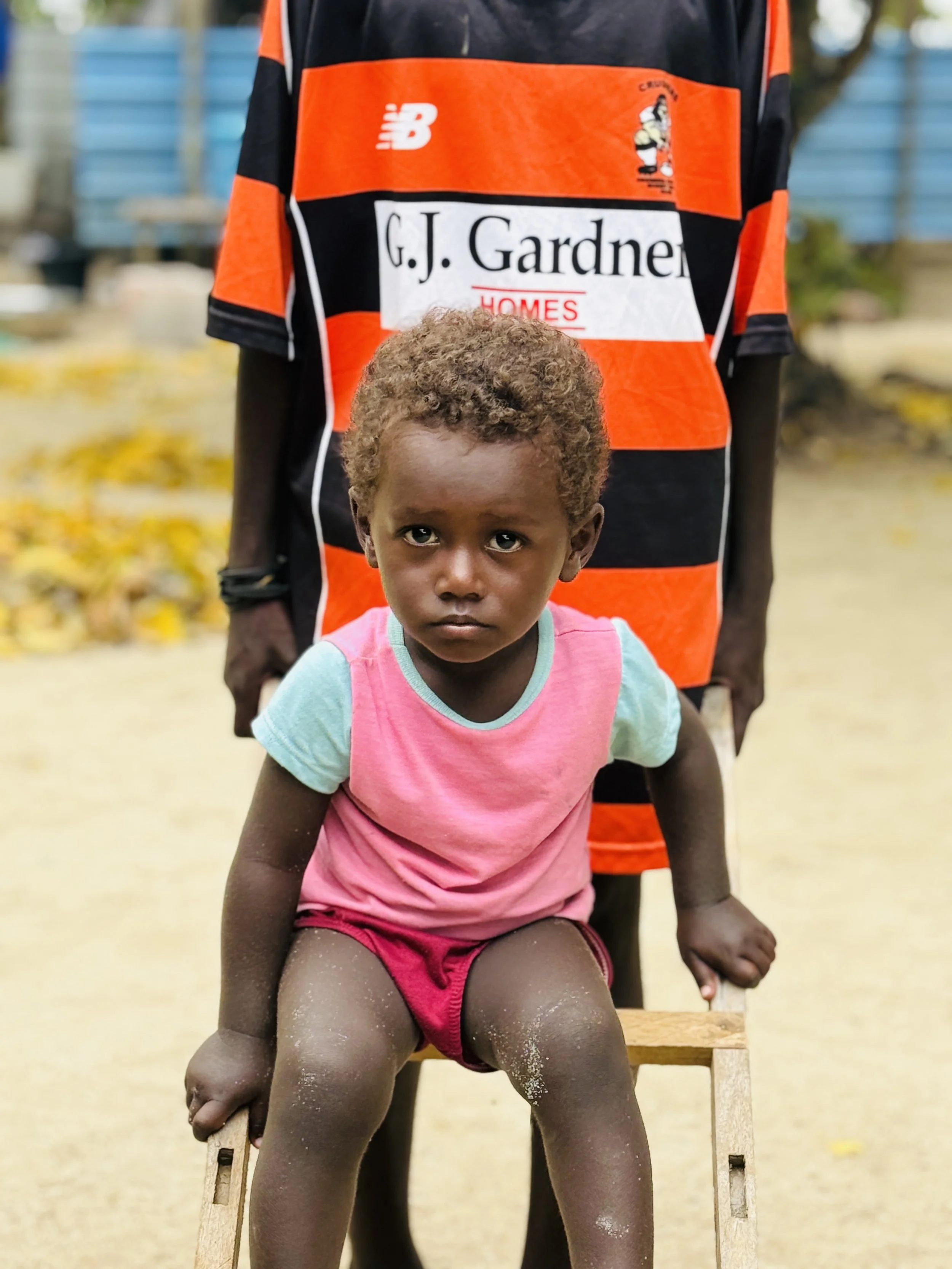
This is Dean, I am the first white person he has ever seen. His expression alone could tell you so. He warms to me slowly, circling his finger around my open palm, the actions to the nursery rhyme his whāngai mother chants. His finger looks like a tiny black matchstick, his irises and pupils so equally dark they blend together. Wide-eyed, his stare is fixed on me. Dean is a name that does not suit him, but his crocodile tee does. He eventually lets me hold him. Hello pikinini I say. We are slow-friends.
Jungle-hikes are a good fun messy affair. Wet and muddy, we skid. Rocks, coconut shells and branches underfoot, we stumble. Vines and vegetation reach out and ankle tap us. The boys and I trip, fall and bumble about, we are bitten, bleeding and itchy yet all agree it is the best fun ever.
As we flounder about like fools the locals are sure-footed, steady and stable. They scoot across a log bridging the stream, cutting sticks so we have something to lean on as we wobble our way over slowly, unbalanced. Their expressionless expressions scream “what are these white people doing?”
We invite Patrick to bring a group with us on Strannik to a nearby bay and trek to a waterfall. He brings cousins, brothers, children, we cannot untangle the family ties. It is fun to trade comfort zones and share our world. Sweet icy cold drinks give the children ice-cream headaches. The cold is a novelty, we have a machine that makes it.
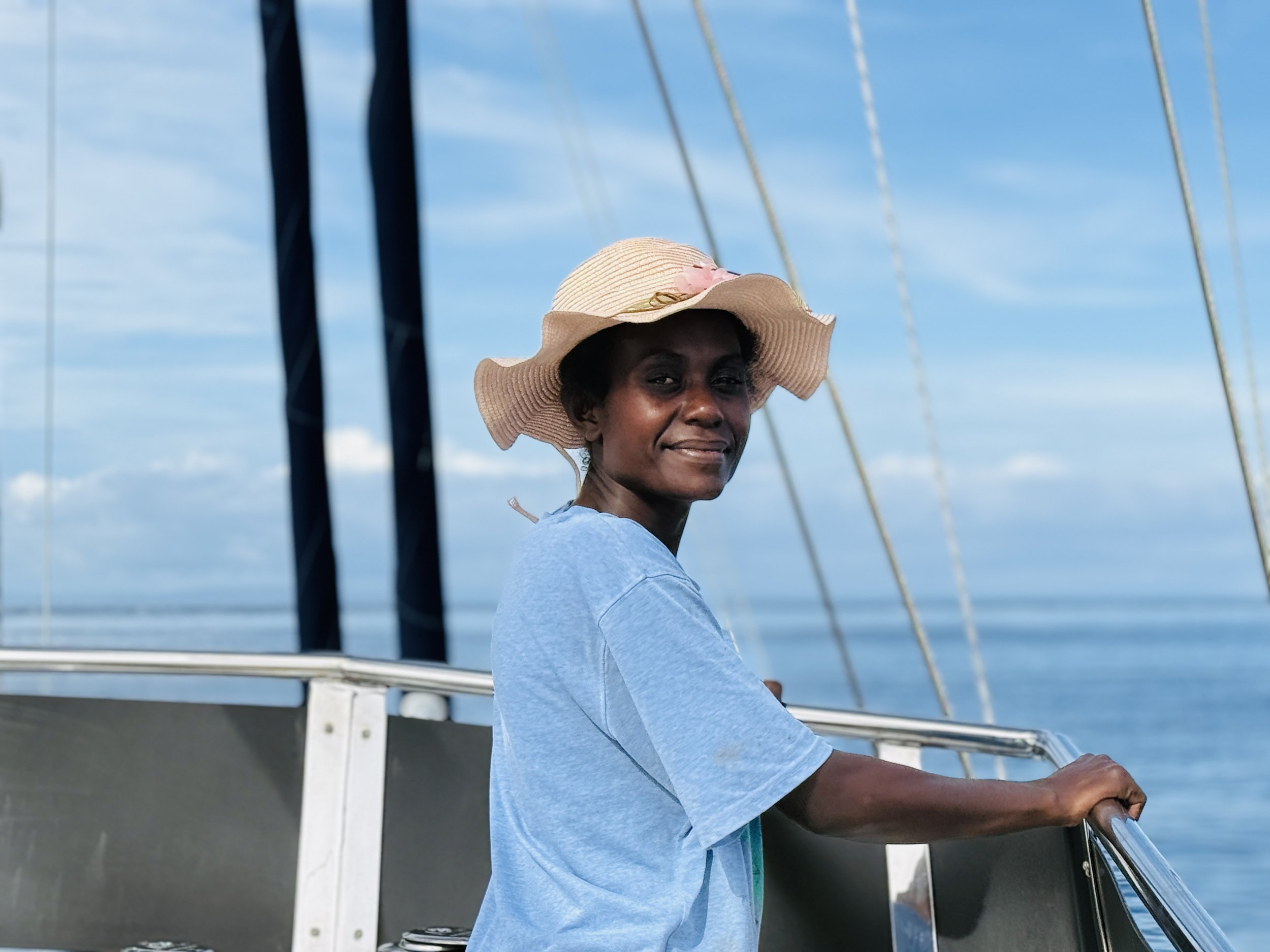
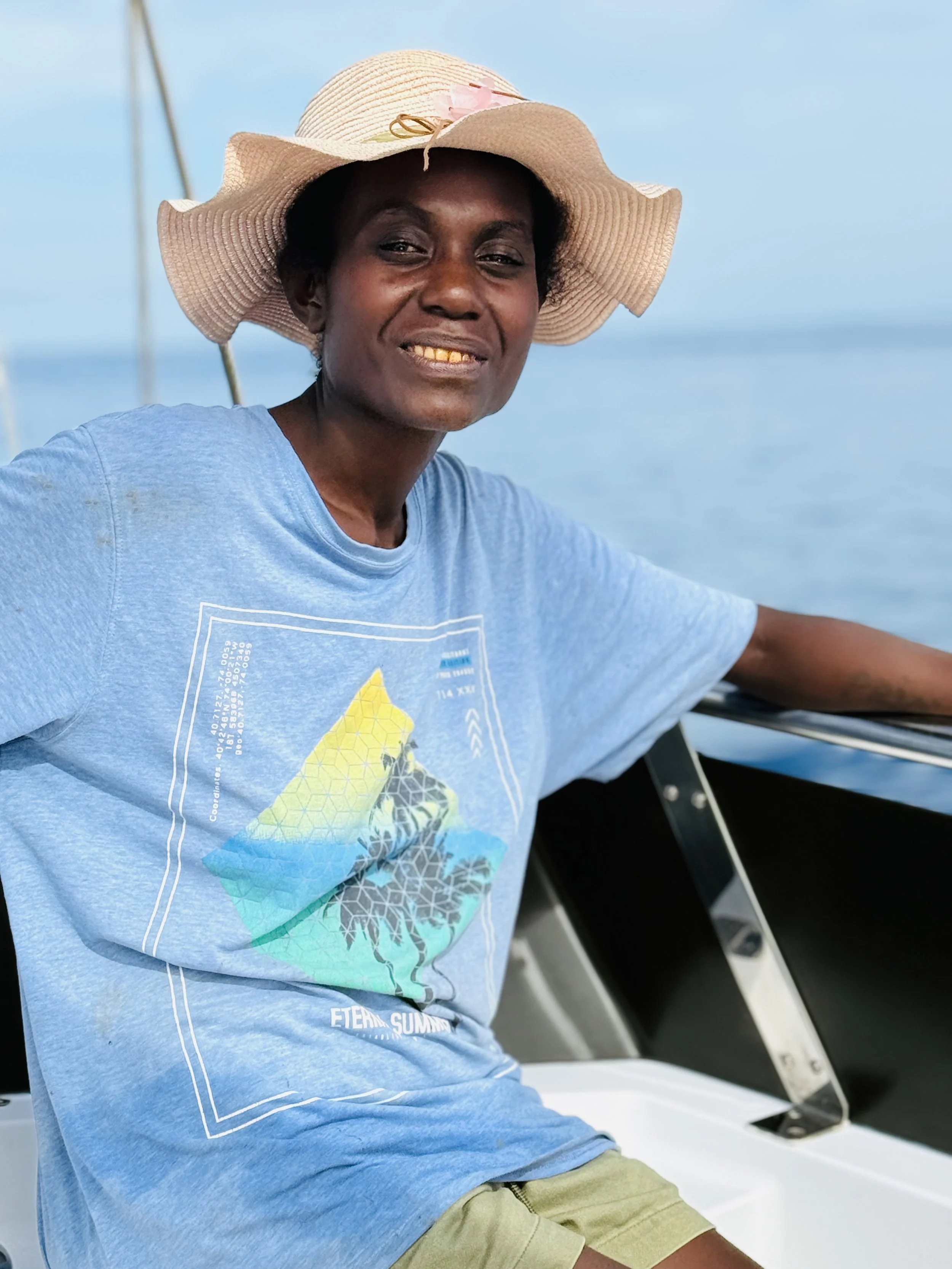
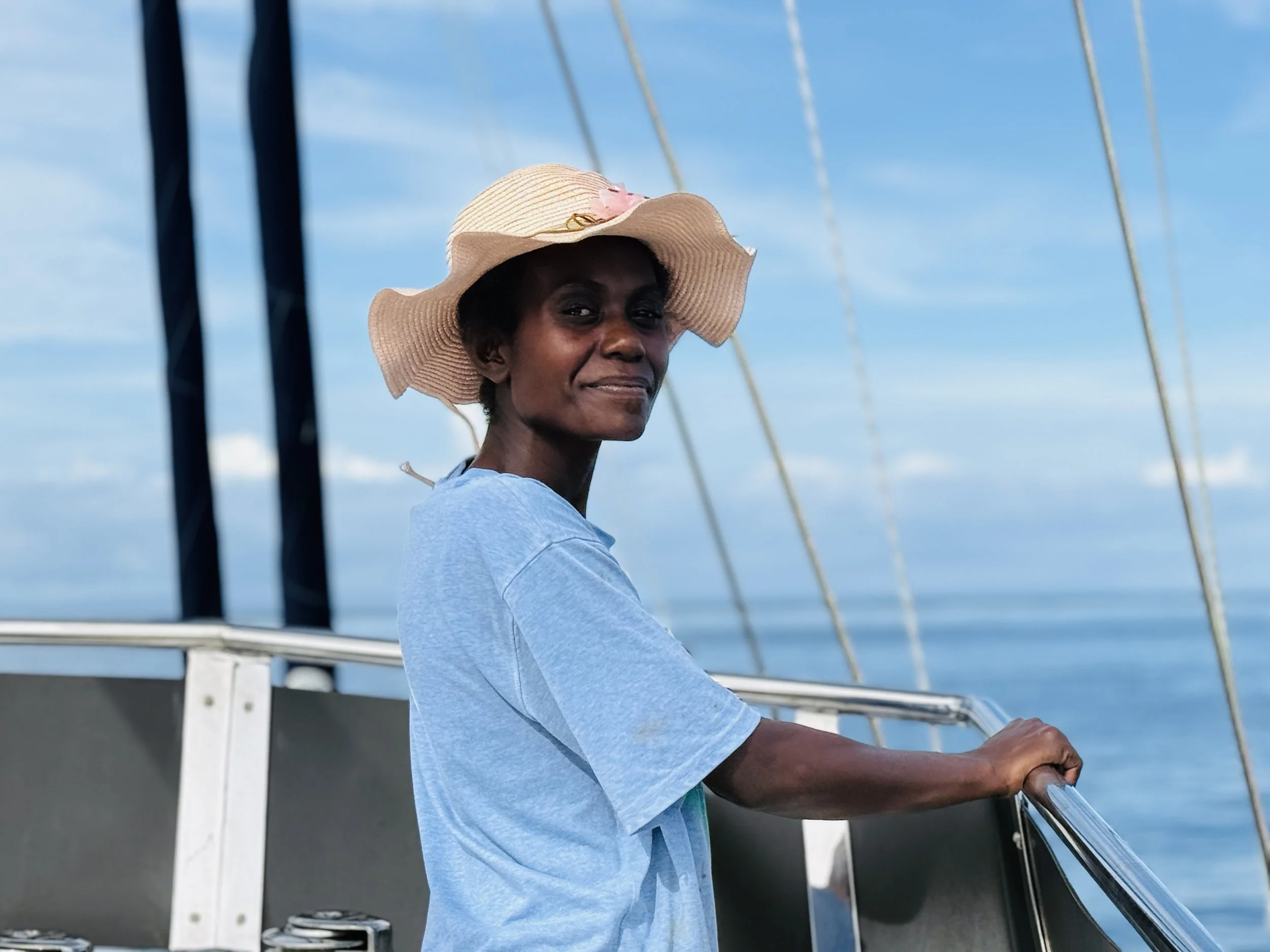
Patrick’s wife Priscilla is the solo local Policewoman on the island. She has two children and is beyond her 28 years. She is the Queen of the jungle, accustomed to being in charge, forthright. With sharp authority she instructs me: Joanne, take my photo. So I do. I have a machine for that.
We launch the tender and head to the river. All aboard. It’s shallow and we motor up the winding bendy river only occasionally do the boys have to get out to push, little mention of crocodiles. Telltales remnants of Maila block the path. Logs, branches, vines close in. The boys draw their machetes and cut the path clear; they are the machines for that.
We secure the tender when a big fallen tree blocks the path. We rock hop slimy boulders through rock pools upwards into the jungle, ears open for the sound of the waterfall ahead. We slip, and slide and fall ungracefully. The locals leap, hop and bound from rock to rock with ease. We all swim together when we reach the falls, washing clean. The cold water is crisp and shadowy. We are restored and everyone is smiling.
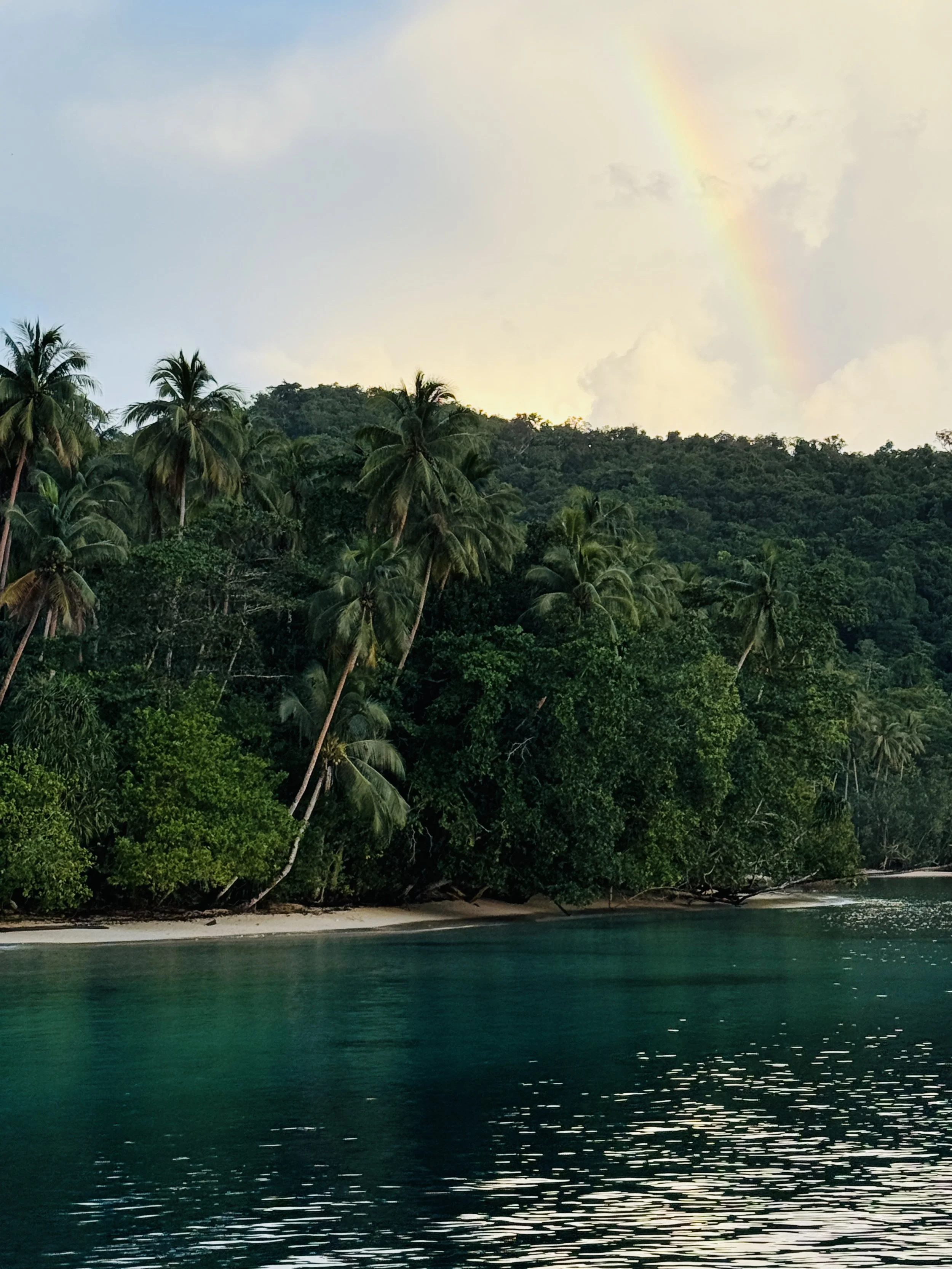
Kariki reminds me of the word kakariki, green in Māori. When I ask Priscilla what the word means she says plainly: “it’s the name of our village”. So I assign the word green, it feels like it fits. The place is lush, multi-coloured greens enclose us in our anchorage home. In perfect contrast, vibrant red parakeets zip zap about, their trills ringing out. Silver rainbows of mackerel arc through the water, chasing or being chased. Their glistening arches are frantic and beautiful. A baby cries in the distance.
Kariki is paradise with her treasures and secrets barely hidden, her mysteries are not far below the surface. It is quite hard to envisage, but here in this special place, thousands of surrendered Japanese troops from Bougainville were gathered and supervised by Australian forces before being returned to Japan. They tell their stories timidly.
Locals seem to have a mixed relationship to their resources, past and future: unsure, proud, uncertain, reticent. Opportunities they can’t quite swing in their favour. The challenge is complex. There is gold in their hills. Locals spend arduous days in the streams, panning, with unsophisticated tools looking for the treasure. Once upon a time someone found a nugget.
However more often the meagre gold dust they gather is taken to Honiara by a broker who makes twice the profit on the deal. All the while large Canadian companies wave short-term cash to gain rights to any potential motherlode. They have the machines for that.
Priscilla has an infected cut on her foot from time spent ‘in the mines’ so to speak. I bathe it with disinfectant and make her a care package of shampoo, conditioner, pawpaw cream, lip gloss and some clothes she wears proudly the very next day. She comments that she likes my hair and would like white skin like mine. Her salary would by far be the most advanced in the village yet she is still struck by gold-fever. She muses that if she hit the pay-load she would buy a boat and sail away. I guess it’s human nature to want what we have not got.
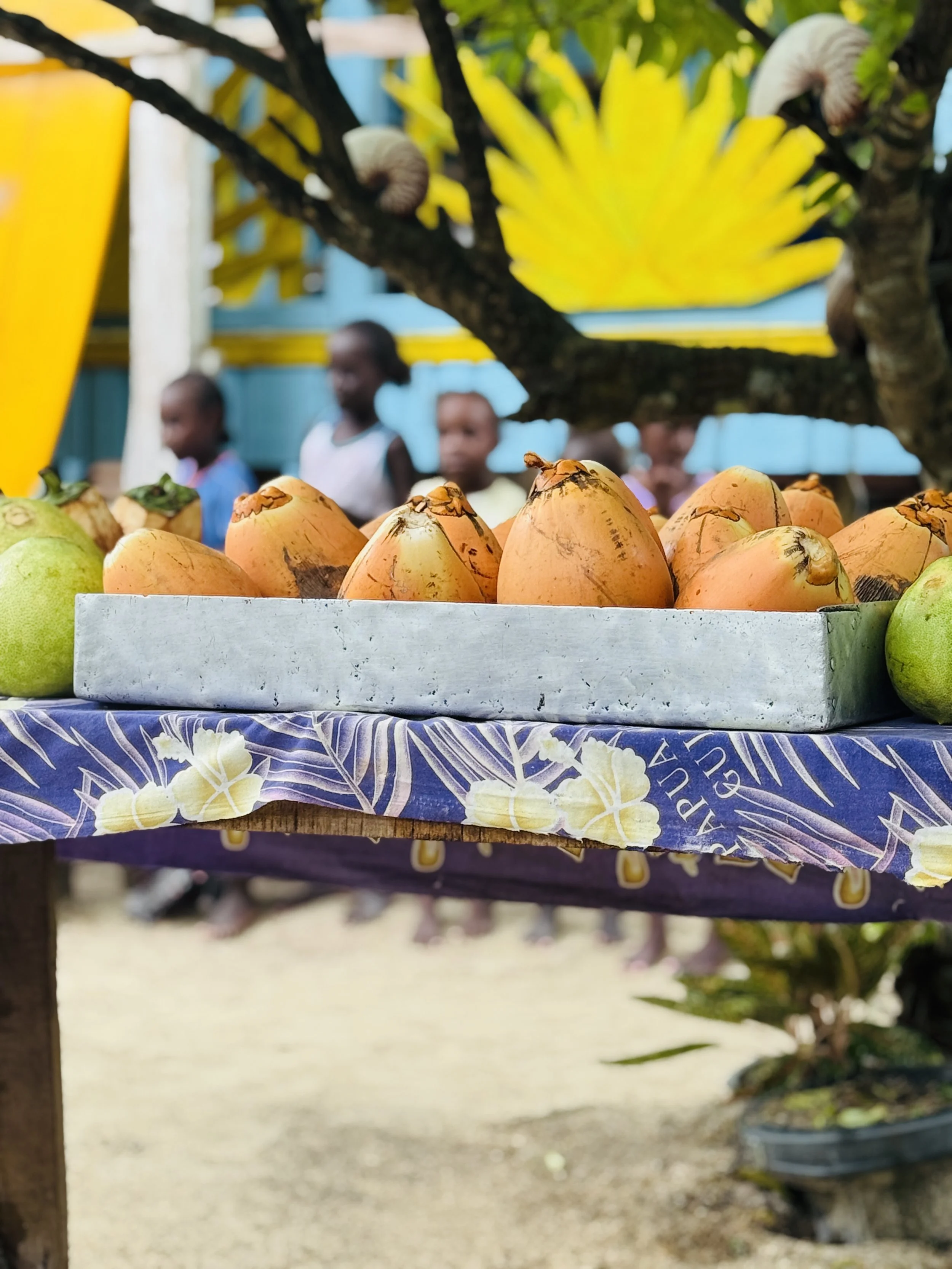
The kids swing from our mooring lines like it’s a new toy. We jump off the top deck of Strannik, and we race, ship to shore. They play in see-through plastic canoes for hours upon hours. A teen whips up a coconut tree, turns and twists a coconut till it thuds to the sand. Some fancy handywork with the machete to serve me a fresh coconut drink, it’s fizzy fresh. This is truly paradise, no machine could make it like that.